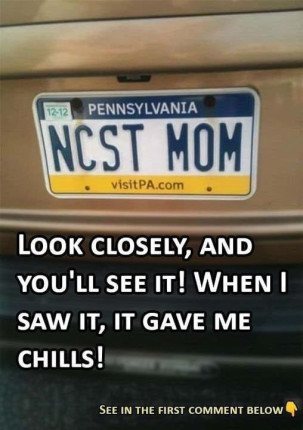
In Perth, Western Australia, a driver’s personalized plate recently made headlines—not because it was proudly bold, but because it was ingeniously subtle. The plate “370HSSV” looked innocuous at first glance. But when flipped upside down, the characters rearranged visually to spell “ahole” (i.e. “asshole”). The twist: it managed to pass the transport authority’s screening process and be legally issued—despite nearly 1,000 plate applications being rejected in a given year for being too offensive or suggestive. NT News+2The Chronicle+2
The media coverage emphasized the contrast: plates like SAUC3D or RAMP4GE are regularly rejected for their suggestive connotations, yet here was one that cleverly dodged scrutiny with a visual trick. The West Australian+3NT News+3The Daily Beat+3 The funny part? Many people only noticed the hidden message after someone flipped a photo or looked more closely—the disguise did its job. NT News+2The Daily Beat+2
Once shared, the plate went viral. Viewers debated whether the trick was intentional or accidental. Some praised the driver’s ingenuity, others raised ethics, and many more were simply amused. It became a meme, a conversation starter, and a case study in how regulatory systems struggle to police clever language. NT News+2The Chronicle+2
Why Do So Many Plates Get Rejected?
To appreciate how remarkable this viral plate is, one must understand what rules and standards the authorities use to reject custom license plates—and how many fail to pass them.
The Criteria for Rejection
In Western Australia and many places with personalized plates, the review body evaluates each proposed plate combination against criteria such as:
Whether it can be interpreted offensively or derogatorily
Whether it contains or hints at references to drugs, violence, sexual content
Whether it can be read in reverse, mirror view, or stylized font to yield inappropriate meanings
Proximity to existing plate series or confusion with normative plates
Use of protected names, trademarks, or mandated exclusions (e.g. military, religious, government references)
General public decency or “community expectations”
In the case of WA’s transport authority, for example, many plates are knocked back under those rules for being lewd, rude, or crude. The West Australian+2NT News+2 Examples of rejected plates include RAMP4GE, SAUC3D, F4K3 T4X1, and BUYAGRAM. NT News+2The Chronicle+2
Volume of Rejections
The scale is significant: nearly a thousand personalized‑plate applications are rejected yearly for being deemed offensive or inappropriate in WA. NT News+1 That means for every plate that makes it through with cheeky or suggestive content, dozens more are blocked.
The system is constantly on guard: review teams check for creative mindset substitutions — letter/number swaps (e.g. 3 for E, 4 for A), backwards readings, word fragments, mirror readings, and more.
Why Some Slips Through
Even with strong rules, some plates get approved because:
see continuation on next page
For complete cooking times, go to the next page or click the Open button (>), and don't forget to SHARE with your Facebook friends.
For Complete Cooking STEPS Please Head On Over To Next Page Or Open button (>) and don’t forget to SHARE with your Facebook friends.