How Social Media Amplified It
The plate would likely remain a local curiosity, but social networks transformed it into a global talking point. Here’s how:
Discovery & sharing – a passerby or commenter spotted the flipped reading and posted a photo.
Virality through novelty – people love puzzles, hidden messages, “aha” moments.
Media pickup – local news and social pages ran stories, giving reach.
Discussion & debate – thousands commented on the creativity, ethics, enforcement.
Memetic spread – shared on Instagram, TikTok, automotive groups, amusing plate‑collection fans.
Sustainment via references – the story gets brought up in plate approval debates, censorship, public policy conversation.
The digital amplification made what would have been a local quirky plate into a broadly recognized stunt.
Lessons & Takeaways: What This Episode Teaches
This viral plate moment offers a variety of lessons—for policymakers, for creative people, and for everyday observers.
For Transport & Regulatory Bodies
Don’t rely solely on forward reading filters; account for mirror/inversion logic in screening algorithms.
Periodically review approved plates for emerging loopholes.
Engage public feedback—crowdsourcing detection of subversive plates.
Define clear post‑issuance complaint and revocation channels.
Be consistent and transparent about rejection reasons to avoid perceptions of bias.
For Creators & Plate Applicants
Cleverness may succeed where overtness fails—but it carries risk (revocation, fines).
Always test how your plate might be read in mirrors, angles, flips, decimal substitution.
Understand local regulations on personalized plates, “reverse reading” bans, or appeal rules.
Remember that public sentiment and authority tolerance can shift.
For the Public & Observers
Hidden messages catch our attention because they activate the mental puzzle circuit.
Humor, creativity, and rule bending often resonate more than blunt provocations.
Such cases spark conversations about what is offensive, how societies regulate expression, and how rules adapt to creativity.
It’s also a reminder that regulation lags innovation—and that subversive expression often finds a way.
Broader Context: Personalized Plates & Controversy
This plate is far from unique in provocative plate culture. Around the world, car owners push boundaries of what a plate can say. Some relevant points in that broader context:
Many jurisdictions reject thousands of plate applications annually for offensive content.
Some plates referencing drugs, violence, sexual innuendo, or protected names are commonly disallowed.
Clever substitutions (numbers for letters, alternate spellings, mirror reading) are part of the cat‑and‑mouse game between applicants and regulators.
Some previously allowed plates have been revoked after public complaint or reappraisal.
Plate culture overlaps with identity, humor, marketing, vanity, and protest.
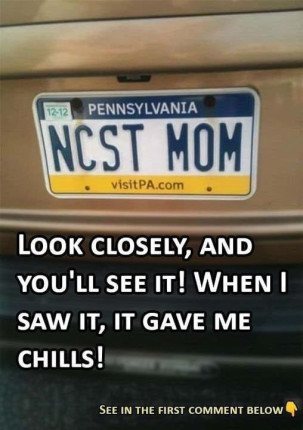
The viral “370HSSV” is a standout case, because of how elegantly it hid the message and how widely it was shared.
Hypotheses & Speculation: Intentional or Accidental?
One intriguing question: Did the driver plan this from the start, or was it an unintentional coincidence—a plate submitted innocently but later interpreted?
Arguments for intentional:
The choice of characters (3, 7, 0, H, S, S, V) is not random; the inversion reading is too precise.
The plate’s hidden word is clearly a known insult, making it less likely by chance.
Many who saw it praised the “genius” design, implying such puns often stem from deliberate planning.
Arguments for accidental:
It’s possible someone applied for “370HSSV” without awareness of what it spells upside down.
Regulatory systems might not preview flipped readings; so a benign-looking submission could slip through.
After-the-fact reinterpretation is common — people sometimes see words in random letter combos.
But whether intentional or not, the plate succeeds because it occupies that ambiguous space between joke and regulation—a space that regulatory systems struggle with.
What Happens Next? Regrets, Rejection, or Legacy?
Once such a plate goes viral, several possible outcomes emerge:
Complaint & Revocation: Authorities receive complaints, review the plate, and may revoke or force a change if it’s deemed offensive under any reading.
Rule Change / Policy Update: The governing body may update screening rules to explicitly prohibit reversed or inverted messaging.
Public Discussion & Media: More media coverage, cultural commentary, perhaps making the plate a local legend.
Plate Holder Reaction: The owner may choose to surrender, defend, or lean into the viral notoriety.
Permanent Culture Reference: The plate may be referenced in future debates over censorship, personalized identity, or creative expression.
Given the precedent of revoking controversial plates, it’s plausible this one will come under review—though its clever obfuscation may complicate that.
For complete cooking times, go to the next page or click the Open button (>), and don't forget to SHARE with your Facebook friends.